Assessment Reimagined
Shaping the future of assessment in an AI-enabled world
Assessment Reimagined is a whole-of-university initiative focused on transforming how UOW designs, evaluates, and understands student learning in an AI-enabled environment.
Purpose
Assessment Reimagined will enable UOW to define a renewed, future-oriented institutional purpose for assessment that is authentic, integrity-embedded, and aligned with AI-transformed practice. The resulting Assessment Model and implementation roadmap will provide a stable foundation for assessing student learning across all disciplines.
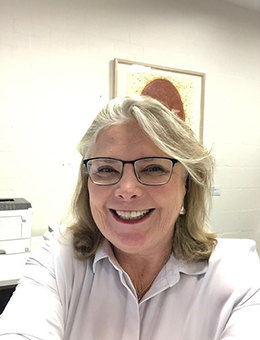

Prof. Ann Rogerson, Academic Lead - Assessment Reimagined (left)
Assoc. Prof. Alyce Mason, Educational Excellence (E²) Lead - Assessment Reimagined (Right)
Contact:  renaissance-program@uow.edu.au
Overview
Assessment Reimagined builds on the foundations of work undertaken in 2025. It is a whole-of-university exploration and design initiative to redefine the purpose, principles, and expectations of assessment in an AI-enabled world. Through open provocations, workshops, forums, and structured feedback, the project will invite staff and students to challenge inherited assessment assumptions and co-design a distinctive assessment model for UOW, one that is future-focused, integrity-embedded, and meaningfully aligned with disciplinary and professional expectations.
Strategic deliverables
-
A distinctive, future-focused UOW Assessment Model that defines the purpose, principles, and expectations of assessment in an AI-enabled world.
-
A practical implementation roadmap outlining policy alignment, capability supports, and requirements for university-wide adoption.
-
A mechanism for continuous review and renewal of assessment practices to ensure responsiveness to emerging technologies and educational trends.
Why this matters
Many inherited assessment models were designed for pre-AI contexts and no longer consistently provide valid, authentic evidence of student learning. Generative AI is fundamentally reshaping how students learn, how knowledge is demonstrated, and how professions evaluate capability. To maintain the integrity of learning outcomes, assessment will need to evolve toward authenticity and genuine capability development. This project will ensure UOW can proactively respond to these shifts, rather than relying on outdated practices or unenforceable AI restrictions. By re-examining assessment’s purpose, functions, and design principles, the initiative will strengthen the relationship between assessment, learning, and future employability. It will also ensure that assessment practices remain aligned with TEQSA’s expectations regarding AI-related assessment integrity risks, while supporting innovation that enhances the student experience.
How it works
At the centre of the project will be the Assessment Think Tank, a cross-faculty group comprising Deputy Deans (Education), Heads of School, and academic leaders (including Academic Program Directors, Associate Heads of School and Deputy Heads of School, (Education)) selected through an open expression-of-interest process. This group will act as the project’s intellectual “engine room”, interrogating key assessment provocations such as grading, integrity, authenticity, feedback, and programmatic assessment, while synthesising insights from staff and student engagement. The wider university community will contribute through provocations, forums, workshops, and structured feedback activities, ensuring the Assessment Model is grounded in diverse perspectives and contemporary evidence.
Mar-Apr
EOI’s Open to join Assessment Reimagined Think Tank
May
Provocation Series
Jun-Aug
Think Tank Co-Design Workshops
Sep-Nov
Commence design of new UOW Assessment Model & Implementation Plan
Dec
Sharing outputs at renAIssance Week
Dec
Synthesis of recommendations for UOW AI-Enabled Education Blueprint
Provocation Series: Igniting Institutional Conversation
Throughout May 2026, this curated series of eight two-hour online sessions featured leading national and international thinkers in assessment, pedagogy, and AI. Open to all UOW staff across all campuses, the series marks the beginning of Assessment Reimagined and invites the university community to rethink the role and purpose of assessment in an AI shaped world. Each session designed to surface tensions, challenge assumptions, and explore future facing possibilities for assessment that better supports learning and student success.
Access the program and recordings below.
-
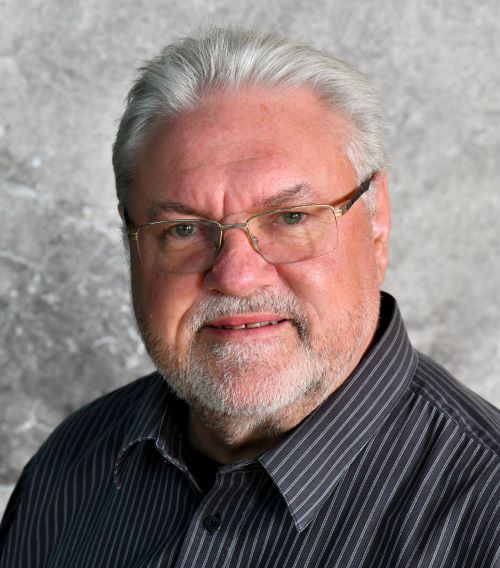 TUES 5 MAY
1 PM - 3 PMProvocation 1: Do we need assessment as we now know it?
Distinguished Professor David Boud
Today’s assessment practices are relics of a bygone era, built for a world before generative AI, before accountability, before the collapse of old certainties. Deakin Distinguished Professor David Boud challenges us to confront a hard truth: most of our common, normal assessment practices are no longer fit for purpose. If we are to meet the needs of learners, educators, and society, we must radically reimagine assessment for a post-digital, engaged world. The call is urgent. The change must be profound, and on many fronts. And it starts with us.
-
 THUR 7 MAY
1 PM - 3 PMProvocation 2: What Happens to Being Human in the Age of AI?
Carlo lacono
What does it mean to educate when machines can imitate thought, simulate presence, and generate artefacts indistinguishable from human work? How do we safeguard the conditions for human flourishing—not just outputs—when machines make competence look effortless? And if the distinction between “human” and “machine” thinking dissolves at the level of performance, what becomes worthy of education itself? This provocation explores how AI exposes deep assumptions about human identity, cognition, and the purpose of education, and how its presence reframes our understanding of human relevance, agency, attention, and creative practice. -
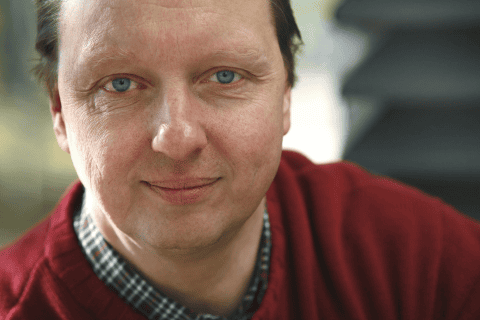 MON 11 MAY
1 PM - 3 PMProvocation 3: The Cognitive Dissonance in Our Universities
Professor Lambert Schuwirth
Universities face a troubling contradiction: while they promote collaboration, trust, complexity, and lifelong learning in their educational rhetoric, assessment practices often remain grounded in competition, individualism, and reductionism. These tensions are not new, but with technology enabling students to bypass outdated systems, the risks are growing. Professor Lambert Schuwirth challenges us to confront this dissonance, and to ask whether assessment can ever be credible if it doesn’t reflect the values we espouse, or worse, if it undermines them.
-
 WED 13 MAY
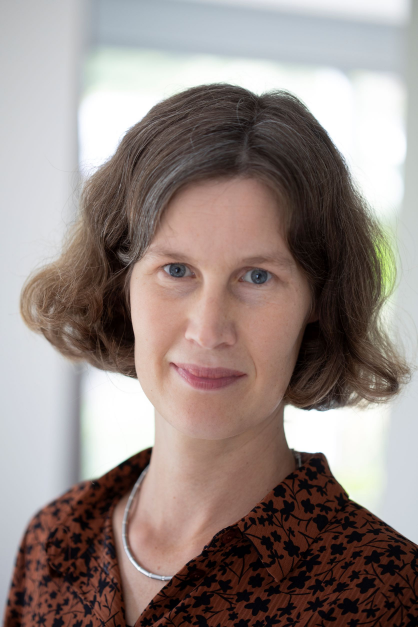
3 PM - 5 PMProvocation 4: The End of Unit-Level Assessment?
Professor Liesbeth Baartman
The era of unit-level assessment is over. In a world reshaped by generative AI, fragmented, one-off tasks no longer provide reliable or meaningful evidence of student learning. They distort what we see, overemphasise isolated performance, and leave us blind to the bigger picture. Professor Liesbeth Baartman argues that if we want assessment to remain credible, we must embrace programmatic models that build coherent, trustworthy pictures of learning over time.
-
MON 18 MAY
1 PM - 3 PMProvocation 5: Beware the Siren Song of gen AI Feedback
Professor Elizabeth Molloy
When we hear about the problems with feedback in higher education, including how resource-intensive it is to provide students with meaningful information (and to follow up what happens next), it’s easy to be lured by the siren song of Gen AI feedback. We know that Gen AI can swiftly generate views or commentary on a student’s work, and ‘accurate’ inputs at that. However, whilst it is easy to focus on speed or accuracy of information, those might be the wrong issues to focus on. Instead, we ought to be far more curious about whether students are motivated to act on what GenAI can offer them.
-
 THUR 21 MAY
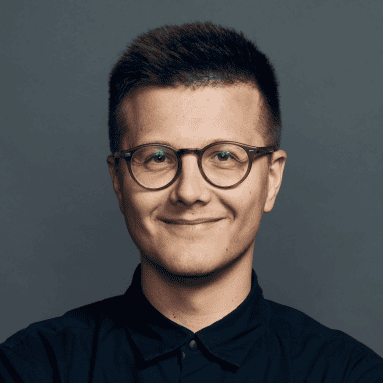
1 PM - 3 PMProvocation 6: Grading for Whom?
Dr Juuso Henrik Nieminen
Grades are often treated as neutral, objective markers of achievement, but they are anything but. From unit marks to GPAs, grading systems shape not just how we assess learning, but how students understand their place in the university. They reward conformity, penalise difference, and often obscure the richness of student learning beneath a veil of numerical precision.
-
 TUES 26 MAY
1 PM - 3 PMProvocation 7: Are Learning Outcomes Still Serving Learning?
Associate Professor Darci Taylor
Learning outcomes are meant to guide what matters in education. Yet in many institutions, they have become a dense architecture, stacked across graduate attributes, course outcomes, subject outcomes, and professional standards. As generative AI reshapes how students learn and demonstrate capability, we must ask: are learning outcomes helping us focus on the future, or are they holding us back?
-
 WED 27 MAY
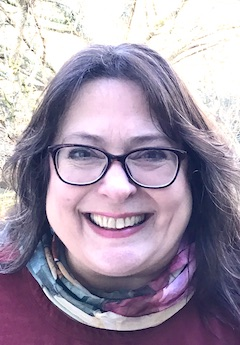
4 PM - 6 PMProvocation 8: Beyond Fairness: Reclaiming Assessment for Justice
Professor Jan McArthur
As higher education grapples with mounting questions of equity, relevance, and purpose, we must look closely at one of its most taken-for-granted practices: assessment. Fairness, measured through rubrics, standardised criteria, and procedural consistency, is often treated as the gold standard. But what if fairness isn’t enough?
What might assessment look like if it aimed not just to evaluate academic proficiency, but to support holistic student development and social transformation? And what responsibilities do educators and institutions carry in making that shift?
After an EOI application process, the Assessment Reimagined project has established two key groups representing key university stakeholders:
Assessment Reimagined Think Tank
Assessment Reimagined Think Tank brings together a cross-section of the UOW community to shape, test, and translate new ideas into institutionally viable models. It provides a structured, design-oriented space for sustained collaboration. The Think Tank includes staff from UOW Australia campuses and UOW College.
Think Tank membership:
- Dean of Students (DVCE):
- Rebecca Dinnie
- Lynette Harris
- Emma Purdy
- Educational Excellence (DVCE):
- Sophie Abel
- Elaine Rodrigues Fields
- Kat Halpin
- Dr Alyce Mason
- Professor Ann Rogerson
- Athavan Sresutharsan
- Faculty of Arts, Society and Business (ASB):
- Yvonne Apolo
- Dr Kellie Buckley-Walker
- Associate Professor Ken Cliff
- Dr Chris Comerford
- Associate Professor Belinda Gibbons
- Dr Mercedez Hinchcliff
- Associate Professor Natascha Klocker
- Associate Professor Jo Law
- Robyn Martin
- Dr Alankaar Sharma
- Dr Sarah Wright
- Faculty of Engineering and Information Sciences (EIS):
- Professor Susanna Guatelli
- Professor Faisal Hai
- Dr Shixun Huang
- Dr Chayne Planiden
- Associate Professor Montse Ros
- Dr Elena Vlahu-Gjorgievska
- Faculty of Science, Medicine and Health (SMAH):
- Dr Amy Bestman
- Professor Karena Burke
- Dr Jane Al Kouba
- Professor Kelly Newell
- Professor Yenna Salamonson
- Dr Johanna Turnbull
- Professor Karen Walton
- Pro Vice-Chancellor (Regional and Metro) (PVC Regional):
- Professor Dilan Thampapillai
- Student Services Division (DVCE):
- Erin Hiesley
- Alan McAlpine
- UOW Global Enterprises (UOWGE):
- Sheridan Reilly
- Professor Christian Ritz
- UOW Library (DVCE):
- James Conroy
- Leanne Webster
- Woolyungah Indigenous Centre (WIC):
- Catherine Moyle
Assessment Reimagined Global Dialogue Group
Assessment Reimagined Global Dialogue Group brings together academic leaders from across UOW global campuses to participate in a series of online dialogue sessions in June. The group discusses emerging ideas and provides perspectives from global campuses that will directly inform the project's future directions for assessment at UOW.
Global Dialogue Group membership:
- UOW Global Enterprises (UOWGE):
- Professor Christian Ritz
- UOW College Hong Kong:
- Yuen Miu Yi Louisa
- UOW India:
- Dr Rajsee Joshi Shah
- University of Wollongong in Dubai (UOWD):
- Dr Muna Amr
- Dr Andjela Bisevac
- Dana Charkaoui
- Dr Kamal Jaafar
- Dr Noor Ulain Rizvi
- Dr Frederick T. Wehrle
- UOW Malaysia:
- Ts. Aidora binti Abdullah
- Dr Alicia Wong Khai Yeen
- Wan Ruzanna
 Assistant